Chapter 4
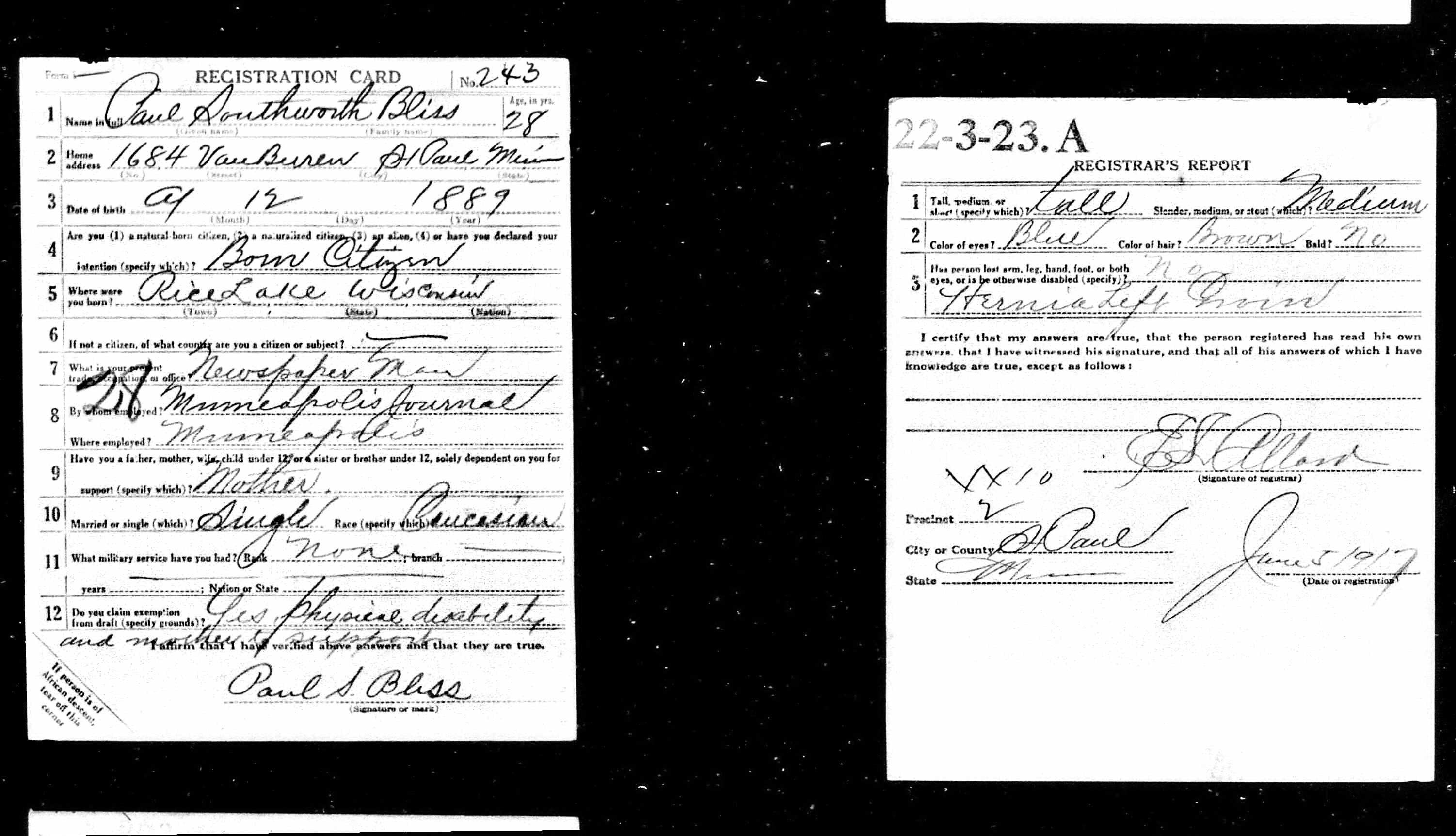
A Letter from the Front
October 10, 1918
A Regimental Adjutant's job is so full of details that one never has three minutes of consecutive time in which to write a personal letter, consequently I am taking this method of reaching my friends and hope the fact that this is a form letter, so to speak, will be forgiven. Since foreign service is reckoned from the day one leaves the United States I have been in foreign service for over a month now and am still hale and hearty, despite the fact that I can wake up in the morning and see the flash of the guns.
We came over on a huge British transport, the name of which I will not disclose for fear the censor might have objections, but any rate, Colonel Humphrey was the senior officer on board and he handled the troops aboard this ship as though he were on the battlefield. As his Adjutant, I issued a daily bulletin on my good old mimeograph machine which I have been at some pains to pack around over oceans, rivers, channels, canals, railroads, good French road and time-worn battlefields. There were two hundred nurses aboard and we had a dance as part of the daily program. This dance was ordered by the Colonel and all officers were required to attend same, and there was also a provision in this order that no officer could have more than one dance in succession with the same nurse. The dance was held at 4.30 P.M. daily on "B" deck. I had charge of the music and found several accordion players among the troops.
In the evenings after dinner we would sit in the saloon and play cards and dance up and down the narrow aisles between the tables. When the boat lurched one often made some gyrations not, properly, part of a one-step or a waltz. The passage was quite clear, except for one night, and very few were seasick. I was not seasick at all. The boat was very steady and rolled far less than some of the other vessels near at hand. One memorable occasion was a furious and blustering night. The seas would break over the decks and on each wave rode a glorious, greenish light caused by phosphorous. This light was so brilliant in the rear of the vessel that one could read by it, and the captain of the ship said it was one of the few times when he had seen such a brilliant phosphorescence in the North Atlantic.
I will say that I was very much pleased at what I saw of England, although it seemed rather confined—bound in. France seems more open. The leaves are getting their color now and in a week or so the woods on the hillsides will be beautiful. One of the most beautiful things in France is the music of the church bells. I was sitting in a beautiful garden the other day, a garden filled with dahlias, chrysanthemums, geraniums and many other beautiful flowers and was meditating in the mysteries of life and also wondering where I could buy some shoe polish, when suddenly the church bells rang out their Sunday morning paen. I have never heard such wonderful music before. However, there are many churches in France whose bells will never ring again.
In the city where I am now, a city which must have been delightful beyond imagination before the war, the magnificent cathedral is a ruin and only here and there does a human structure remain sufficient intact to permit of habitation. There is a high bluff rising beyond the city and on it is a grove of pines sheltering a very old chapel. The roof has been destroyed by shell fire, but some of the images still remain standing. From the top of this hill one can see many wonderful sights, many of which the censor would not permit me to relate. Everywhere there is the feeling that we are winning the war; there is the air of the conqueror in every officer and man. General Pershing said the other day, it is reported, "Heaven, Hell or Hoboken by Christmas."
I find myself looking at everything thru different sets of eyes, as it were. Now I see myself the historian, again the newspaper man—How I would long to have a direct wire to my home office with permission to print everything I wanted to. Then I imagine I am doing a stage setting for Belasco. Heavens on earth, if Belasco were over here now he would get some wonderful ideas. I see a drama in every ruined chateau, a one-act play in every officer and weary soldier and laboring truck which passes.
When our long train, consisting of cars, each one shaped like a huge box and holding forty men, and two officer's cars, came into this village in the dead of the night we could hear the roar of guns but it was too misty to see any of the flashes.
The next night, however, there began a bombardment which lighted the whole heavens and increased in intensity until it was impossible to stay asleep, so about four o'clock in the morning we turned out and climbed the hill to get a view of the first battle most of us had ever seen. The bombardment has been intermittent since then, but now and then breaks out in full fury. A tremendous gun, one of our own, not so far away makes our windows rattle as though struck by a shower of stones every now and then.
One of the most beautiful sights is the aeroplanes which fly over this place. We officers eat with the men and make a deduction on our pay vouchers to cover the cost, which averages about fifteen dollars. We are all carrying around from five hundred to three thousand francs, with no place to spend it. There is no place where you can spend it, except at the French canteen, which handles now and then a few cigarettes and occasionally a few newspapers. If an American bank were to start up in our little village he would do a land office business. I figure that I could live on about three dollars a month here, exclusive of board, and as that comes out of the monthly pay voucher, a handful of centimes would do very nicely for current needs for a month. As soon as one of our officers goes down to a part of France which has not been desolated we are going to load him up with some money for home institutions.
Things come up suddenly here, so do not hold it against me if the coherence of this letter is not just what it should be. Just at present, Chaplain J.E. Custer who has been chasing our regiment around trying to find it for some weeks, arrived and reported for duty. He is a very fine appearing young man and I think, I shall like him. One of his tasks will be that of Regimental Postmaster. The task of censor is one which all officers are required by General Pershing to regard as of the greatest importance. He urges that all men write home and asks that officers urge them to write home, even if it requires them to sit up and burn the midnight candles. Of course, all the cities are dark at night so that the Boche aeroplanes cannot drop bombs. You would be surprised how soon things became tame. We were all tremendously interested in the sights and sounds the first day, but now they would have to stage a divisional attack before we would pay the slightest attention to it.
Everyone, of course has a gas mask and we are proficient in getting them on in a hurry. When we were given gas instruction by the Army Gas School Officers they tested us to see how long we could hold our breath. We stood in a ring and as each man was forced to "let go" he stepped into the middle of the circle. I was the last one to give in. I held my breath for ninety-five seconds and could have held it fifteen seconds longer, I think, but as there was no competition I did not want to keep them waiting. As a final test we walked into a chamber filled with lachrymatory gas (a tear producing gas) and then removed our masks. Judging by the tears that flowed there was a great deal of grief at the moment.
The French roads are wonderful, despite the fact they bear a tremendous traffic. They stand firm as a rock and are going to be a great factor, I should say have been a great factor in the winning (for I cannot regard it otherwise) of the war. The papers say that General March has given out the statement that there are 1,800,000 American troops over here. Verily I believe it. Motor about for thirty or forty miles in any direction and you see Americans as thick as in New York. The French and Americans get along beautifully. They seem to like us and we make no bones about our liking them.
They say that the English and French do not hob-nob quite as well; that the Australians and the French are as thick as peas. I personally like the British very well. Their excellent manner of speech. In speaking of French reminds me that I am mighty glad that I had even a small acquaintance with French grammar before coming over here. I now have a skeleton on which to hang the words and am rapidly acquiring ability to converse with the Poilus. Of course, I can read French almost as fluently as English. The other day when the Central Empires and Turkey asked for an armistice and peace negotiations, a couple of French soldiers outside looking at the "Petite Parisienne" said "LaPaix, La Paix" and kissed each other on the cheek. I merely laid it to their excitability and do not believe they really thought that the show was over.
We have been assigned three Boch motor trucks which were captured the other day. They are very fine machines, but evidently rubber is mighty scarce in Berlin as they have steel tires. They make a frightful racket and the fact that the engines will stand the jar proves that they are of good workmanship. The Colonel has a Dodge car and travels incessantly. We have been to many interesting places on business. We were at General Headquarters about a week or so after we landed in France, and Colonel Humphrey seemed to know every General and Major-General about the place. It was a great pleasure hearing the conversation. I saw Secretary, Newton D. Baker, a small, quiet man, looking rather out of place with all the uniforms about—but you should have seen the Major-Generals click their heels together and salute when he passed. Of course, I really cannot tell you anything interesting and so will have to let it go at that. You will have to read between the lines and get my story.
Very sincerely yours,
Capt. Paul S. Bliss
Adjutant, 800th Inf.
Amer-Ex-Force via New York