Chapter 7
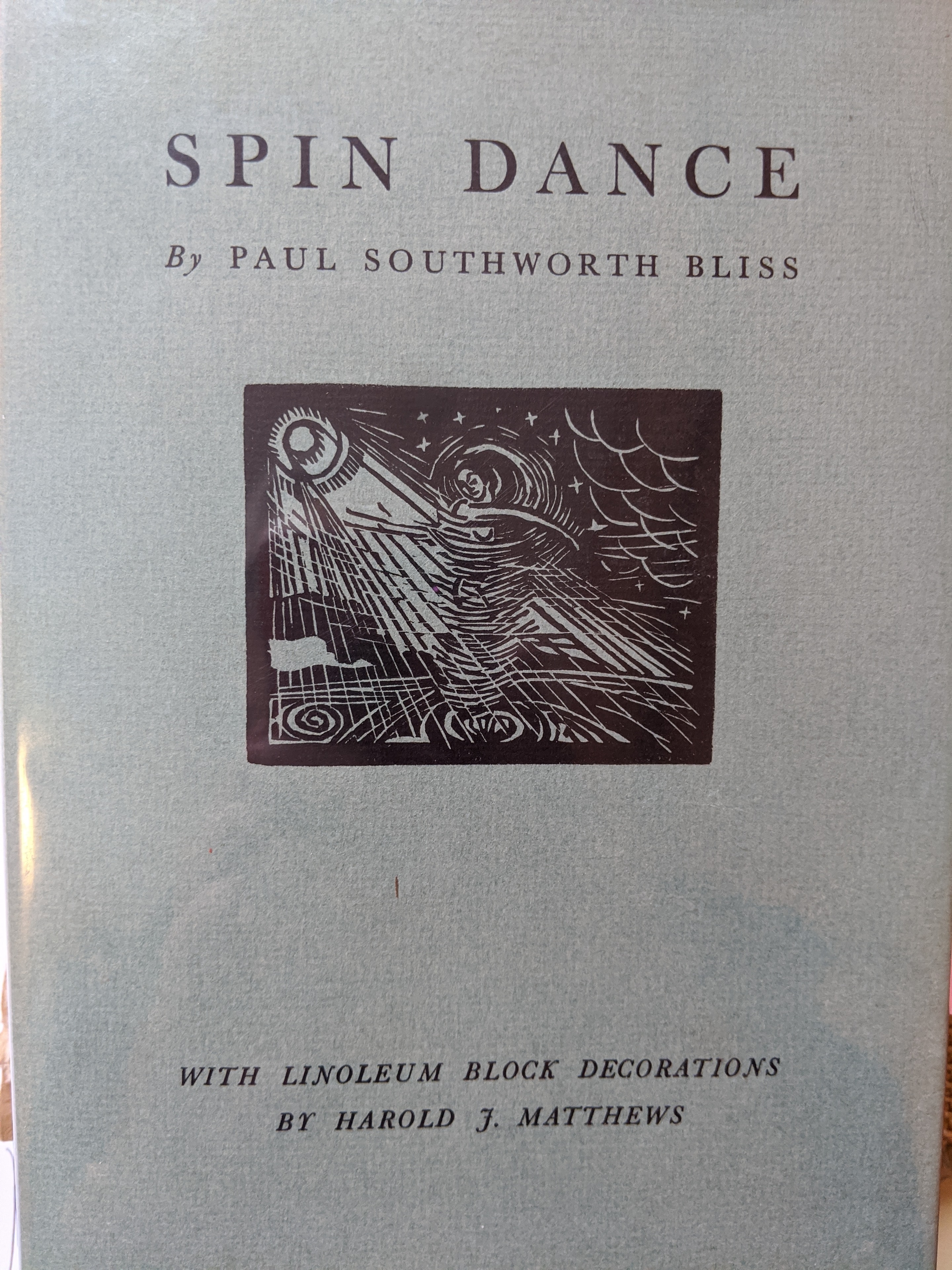
Introduction to Spin Dance
By Laura Sturlaugson
The Amateur Spirit
"We need more true amateur spirit. Amateurism has sometimes been confounded with lack of skill. The true amateur spirit is concerned with skill—but not much concerned. The true amateur spirit seeks out a sport or hobby not primarily for itself, but because it serves for him a variety of purposes.
"One man plays golf—not to beat par: that is professionalism. He plays it for the walking, the talking (of course, not when his partner is driving or putting) for the intimacy of the skies and the fields, for the exercise, and because he likes the game itself. Yet he studies consistently and sometimes vanquishes even the professionals. But the game does not take him away from his chosen profession. Rather it strengthens him in that vocation, because it gives joy, health, companionship.
"There are no persons one might point to, who more ideally illustrate the true spirit of amateurism than Paul Bliss and Harold Matthews. For several years they have joined their skills in verse and art. They have created beautiful little books, joying not only in the verses and illustrations but in discussing and designing the format for their books, selecting the paper and type and in worrying the printer almost to death, poor soul, before the literary child was fully born.
"Neither artist does the thing for compensation or hope of it. It gives both a means of bringing to their ever-widening circle of friends, their fresh experiences. They have submitted their work to the judgment of severe critics. But they have remained their own publishers.
"If that be amateurism, make the most of it!"
Reviews of Spin Dance in National Papers
"Mr. Bliss, who has been a newspaper man, soldier and social worker, and Mr. Matthews are true amateurs—that is, they collaborate in the creation of these illustrated books of poetry not for compensation or hope of it, but for the sheer joy of the work . . . Mr. Bliss has the very enviable ability to make one actually see that which is described. The linoleum block illustrations by Mr. Matthews are splendid and reveal his capacity for true interpretation."
—Jeretta Malone, Jefferson City News and Tribune
"Mr. Bliss continues his happy habit of giving birth, every year or so, to a volume of nature poetry. This offering is characteristically his in its freshness of vision, sincerity of feeling and airy and unassuming verse forms. The reader feels that the distance between conception and execution in these poems is brief and direct, and this makes for an intimacy and vividness which are immediately sensed. A tree, a grain elevator, an injured gopher, rarely a person, spur him to expression. The result is brisk, sometimes naive lyrics."
—Minneapolis Star
Book of Poems That Have A Rare Haunting Beauty.
"'Spin Dance,' by Paul Southworth Bliss—A 98-page book of poetry and prose mainly dealing with the beauties of nature, of gardens, of trees, of flowers and occasionally of other themes. There is a beauty of phrasing to many of the lines of his verses that it is difficult to get out of mind and the same richness of imagery is found in the prose selections at the end of the volume. He gives the reader impressions of swaying boughs, scent and artistic loveliness of blooms, of garden scenes, all of which are familiar to one, but have never been so enticingly or beautifully described before."
—Boston Globe
"A giant cottonwood tree on the golf course at Como Park in St. Paul, a farm at Georgetown on the Red River with a barn built around 'a remnant of an old Hudson's Bay trading post,' the Black Hills, a prairie sunset are among the subjects of poems in a volume of charming verse by Paul S. Bliss entitled Spin Dance (Chicago, 1934). The poem from which the volume takes its title describes the dance 'of the wind and April earth' on the mighty 'dance floor of North Dakota.' Linoleum blocks by Harold J. Matthews illustrate the volume."
—Minnesota History Magazine
Selected Poems from Spin Dance, 1934
Badlands
from Spin Dance, 1934
One morning when the world
Was at peace,
I crossed the Little Missouri River
In the Badlands.
The sky was all blue,
The sun all yellow;
The canyons were
Deep vales of content,
Warm, indolent.
The distances were immense:
I wondered who it was
Who first called these
Beautiful, man-thwarting domains—
The Badlands.
March 12, 1934. Watford City, N.D.
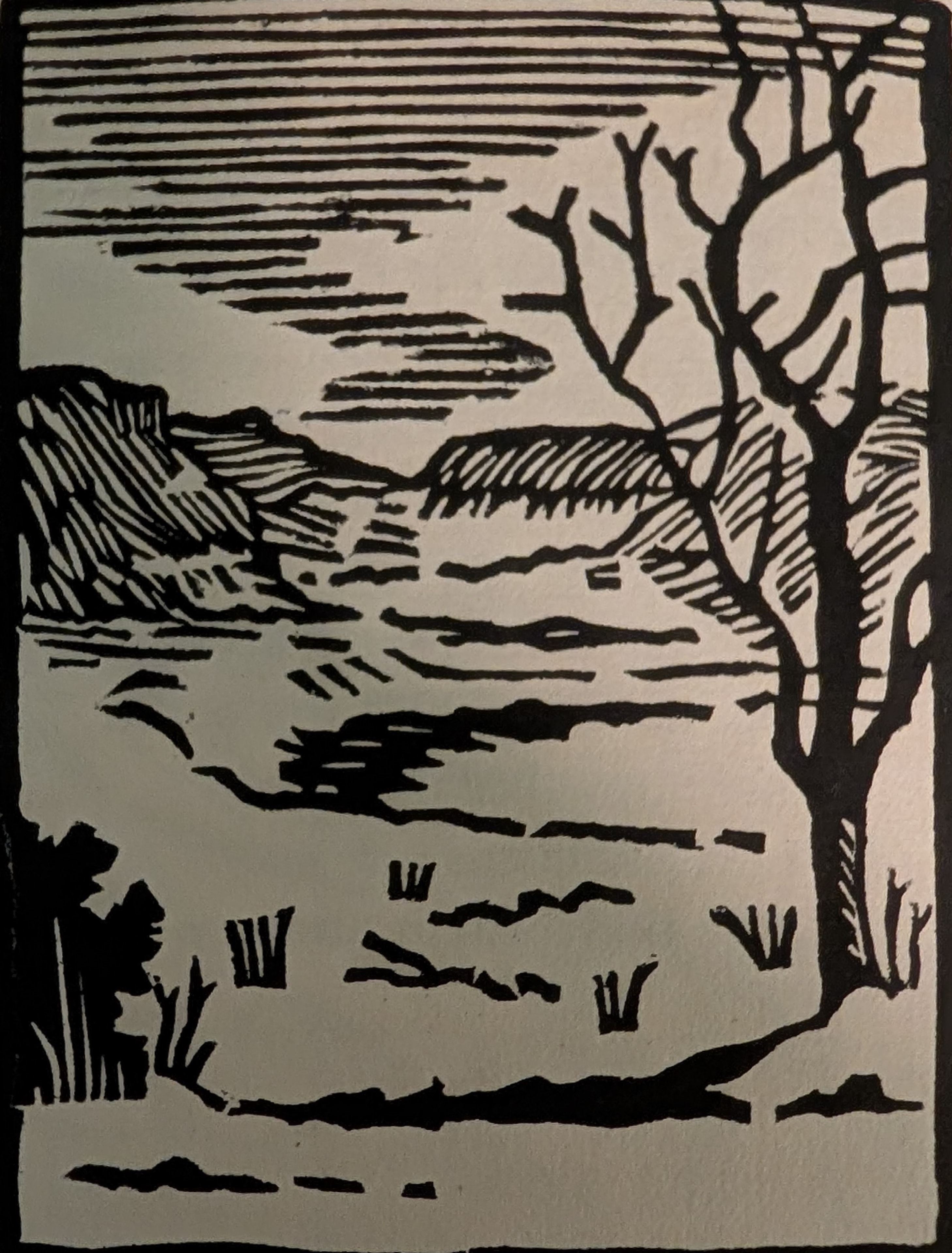
April Snow
from Spin Dance, 1934
Coarse woven snow,
Comfortable as old tweeds,
Lie warmly on the ground.
An hour's wear in the sun,
And the snow-garment
Is in myriad patches,
That are like pieces
Of a mighty puzzle
That will never be put
Together again.
The black, wet earth
Shows through,
And a farmer says:
"Wouldn't it be fine
If I had all
My wheat in!"
April 15, 1934. Rolla, N.D.
Grain Elevator
from Spin Dance, 1934
In the vast, diffused
Yellow of early sunset, I see
The dark turret of a
North Dakota temple.
What angled sturdiness!
The first thing the sun shines on
In the morning, and the
Last thing it shines upon at night
Is that
Gigantic
Geometrical
Garnet-colored temple
Of North Dakota—
The grain elevator.
March 2, 1934. Rolla, N.D.
From the window of Room 1, Vendome Hotel, I saw the flaming yellow west, the sun itself hidden by the dark parallelograms of the elevator top.
The Pheasant
from Spin Dance, 1934
A small section of rainbow,
Called a ring-necked pheasant,
Strutted along the graveled road.
It turned foolishly, and darted
Under the wheels of my car.
I saw it leap up and fly
Strangely,
A hundred yards into the prairie.
Then it fell and
Lay still.
I went to the rainbow and took it
In my arms.
I carried it with me for
Many, many miles.
One man, seeing the rainbow,
Remarked: "Pheasant
Are mighty good eating."
March 12, 1934. Killdeer, N.D.
Barnswallow Buff
from Spin Dance, 1934
There is a color under the sun
That I call barnswallow buff!
It is to red
What ivory is to gold;
It is to yellow
What moonlight is to sunshine;
It is the color of a maiden's smile,
And a mother's tears;
It is the color of a bride's blush,
And a widow's grief.
I have given my undertaker
Instructions to paint my coffin
Barnswallow buff,
So that my corpse
Will be both warm and cool.
August, 1934. Rolla, N.D.
Barnswallow buff is the color of the forehead, throat and underparts of Hirundo erythrogaster—the common barnswallow.
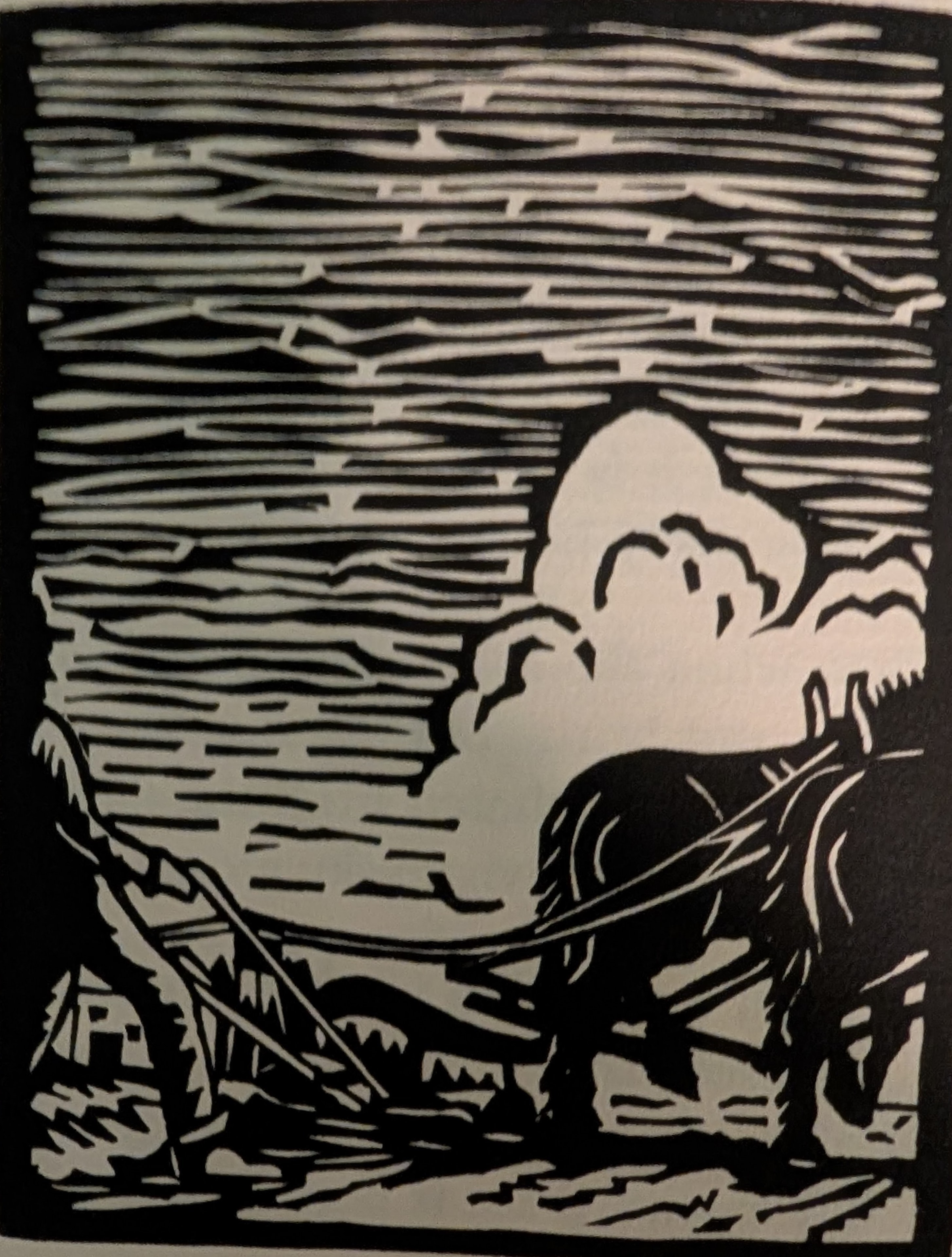
The Coltered Plow
from Spin Dance, 1934
Sing me a song
Of the coltered plow,
Turning a furrow
Sharp and deep;
The dust is thick
On the farmer's brow,
But rich is the harvest
That he will reap.
The farm dog follows
Behind all day;
His tongue is streaked
Like his master's face—
He thinks without him
The plow would stray,
So he faithfully trots
In the colter's trace.
The doves wheel over
The plow and man,
The blackbirds chatter
And pick, pick, pick!
The meadow lark sings
As only he can,
And a rabbit starts
Where the stubble's thick.
Sing me a song
Of the coltered plow
Turning a furrow
Sharp and deep;
The dust is thick
On the farmer's brow,
But oh, what a harvest
He will reap.
May 12, 1934. Watford City, N.D.
George Timms, prominent farmer near Cando, N.D., showed me his plows. A colter is the round cutting wheel that leads the plow-share.
Rolla Red Rose
Old Manner — from Spin Dance, 1934
Far I have traveled,
O'er mountain and strand;
Time has unraveled
Like twine in the hand.
Sometimes I'm sad
As I seek my repose,
Till my thoughts run back, glad,
To my Rolla red rose.
Chorus
The red rose of Rolla,
My Rolla red rose,
Your glow I will follow
Till life's shadows close.
I went off to battle,
My country to aid;
The men fell like cattle,
But was I afraid!
The last bullet fired,
Defeated our foes,
I lay down and dreamed
Of my Rolla red rose.
Chorus, etc.
I'm old now and weary
And walk with a cane,
My two eyes are teary,
I've nothing but pain,
A few more short hours
And I'll go I suppose,
Oh, please omit flowers,
But my Rolla red rose.
Chorus, etc.
July 2, 1934. Bottineau, N.D.
Redder than all other roses are those growing wild along the roadside from Rolla to Bottineau, N.D.
St. Louis Poems and Essays
Old Man Shaw Walks at Twilight
from Spin Dance, 1934
After the tulips have been beheaded;
Before the lily-ponds have been bedded,
To every garden there comes a time
When each shrub and tree has reached its prime—
When the leaves are lovely beyond a dream
And green is the color that reigns supreme.
That is the time that Old Man Shaw
Walks at twilight past elm and haw!
Look! Over yonder you see him stroll . . .
He pats a persimmon's velvet bole—
(That's one tree that he loves to pass)—
And he smiles at the tri-leaved sassafras.
He lingers long near a buckeye tree
And sips with his soul, like a honey bee;
Then with the iron-like oaks he communes—
They sing him deep-throated Quercus tunes;
The weeper makes its accustomed plaint,
But the red, white, shingle, without restraint
Tell how they stand forever his guard,
To fend off tempest and icy shard.
He thanks them and comes to a fine red birch,
And a chestnut, big as the roof of a church;
The gentle maples he looks upon,
Pine, locust, ash—and he hurries on
To the Osage orange and cypress, bald.
On the walnut and yellow wood he's called . . .
"There's the coffee tree somewhere down this way,
And tulip and beech," I hear him say.
Alder and poplar, gingko and bean,
I'm quite certain that he has seen;
Cork tree, sweet gum, mulberry, too,
Hackberry, hornbeam! How well he knew
Where each was planted there each would be—
That's something he liked about a tree!
But the busy sun its rest has earned,
Back to his marble Shaw has returned;
And priestly Ailanthus says a prayer
O'er the good old man who is sleeping there.
The night wind summons its ghostly choir;
Mounting higher and mounting higher
The thunder roars; and the lightning's flashes
Spy out witches' brooms, birdnest caches!
But Shaw sleeps quietly on and smiles
And has no fear of the weather's wiles:
His is forever a sleep of peace
(Cleft but by twilight's sweet release)—
For he is master of every spell
Who has planted a tree for sentinel!
I hope none will think me disrespectful when I refer to the founder as Old Man Shaw. (Indeed, when this poem was first printed in the St. Louis Globe Democrat the name Henry Shaw was used.) It is to me a term of endearment. Mr. Shaw was born in England in 1800 and came to St. Louis as a young man. He was successful in the hardware business and retired at 40, thinking his life's labors ended. Then he began to live—in his garden. And he lived 49 more years. It is probably of interest to none but the author that he was born in the same year in which Mr. Shaw died. The present director, Dr. George T. Moore has increased the world fame of the garden—and has served the ends both of science and beauty. He has kindly examined this manuscript.
It Is Sunset in St. Louis
Tuesday, June 20, 1933
Few cities can boast of more beautiful sunsets than St. Louis. By beautiful, I do not mean sunsets that resemble the collision of a fresh egg—or an unfresh egg—and a delicatessen window. I mean rather, those sunsets that along about seven o'clock, on a day in the latter half of June, touch the sycamore and the maples and the oaks and the poplars and the ailanthus with a gentle touch of gold.
The ailanthus or tree of heaven! Have you seen it in St. Louis at sunset?
Soft on the pulse of dusk, the tree of heaven
Presses cool fingers that are strangely still.
When it is sunset, the air is quiet in St. Louis, and you know that the evening will be calm, for in St. Louis, things do not happen suddenly. If it be calm at sunset, you know that it will be calm, at least until midnight.
So I look out of my north window. I cannot see the sun, but I can see its lovely light resting on my ailanthus. And, oh, my ailanthus tree!—I have not seen it for ten days, owing to far journeyings—has produced lovely red seeds. Some seasons they are red, and some seasons they are hardly more than yellow. Now, a glorious sight they are . . . like panicles of flowers, these lovely red seeds—little keys or samaras that will, in months to come, flutter to some fence corner and grow, to make resplendent the home of rich man or poor man. I say to you, there is no tree in St. Louis at sunset more beautiful than the tree of heaven. The botanists call it Ailanthus glandulosa. The seeds are on one tree; the male flowers are on another. The male trees have a rather strong odor, and for that reason are often chopped down.
Beyond the ailanthus, in a shaded back yard, I see the deep green foliage of the Hercules club (Aralia spinosa). Later in the season, it will have a yellow plume upon its crest that I will almost mistake for sunshine. But now it stands in all its beautiful green, something to cool the most feverish thoughts.
For me at sunset then, ailanthus and aralia, at exactly seven o'clock when not a single leaflet moves. What calm! What dignity!
Washington on a June Night
Monday, June 19, 1933
The city of Washington on a soft June night speaks to the traveler through its trees. Tonight the great magnolias bore blossoms like white globes of incandescent light, and the linden trees gave out their rich odor—the basswood odor that speaks of honey and the laden bee.
Every elm was a temple of loveliness. Lafayette Park! As I entered the corner presided over by General Rochambeau, I passed under a great elm that was like a cathedral. The moment I stepped under it, its freshness struck my cheek with a deep-woods scent that was ozone to the nostrils. I passed the gaunt but dignified empress tree, on the way to Lafayette's statue, passing many a glamorous linden and hemlock and beech. Between the Lafayette and Kosciusko statues, I found a great tree whose leaves held my eye. In shape and habit, the tree was somewhat like the neighbor elm. A closer look revealed the compound leaf pattern. It could be only ash. White ash? Its leaflets were not quite large enough. I noted the name shield: Red ash (Fraxinus pennsylvanicus).
Under more elms and lindens to the Von Steuben monument, and so back to General Rochambeau.
There is no statue like a tree;
Von Steuben, Jackson, Lafayette,
Stand in solemn dignity,
Which in which corner . . . I forget!
The President has just gone on his vacation. There was a notable absence of sentries in the vicinity of the White House. Two policemen, a sergeant and a patrolman, stood alone, near the portico. Two great shrubs, with smallish oak-shaped leaves, attracted my attention, and I picked one or two leaves for later identification.
Thence I circled the White House grounds. Its many fine trees stood contentedly in the dusk—the horse chestnuts, lovely with their heavy foliage. As darkness fell more rapidly, somehow the trees seemed to take charge. The great lighted shaft of the Washington Monument appeared against the heavens; and the trees rested on their arms. All is well in the nation's capital while they stand sentinel.